Play Therapy · Bangkok
A safe space for children to play, grow, and be themselves
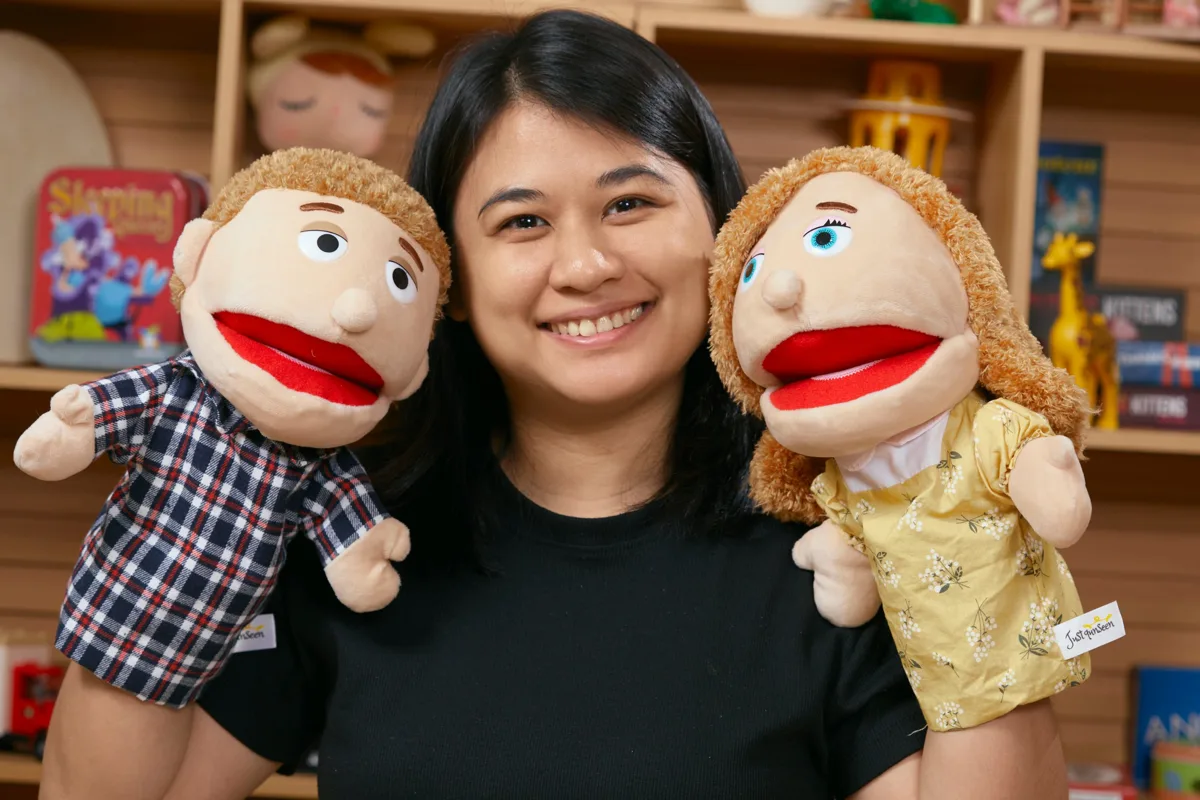
Hi, I'm Bonus, a play therapist. I support children through non-directive play, so they can express their feelings in their own way — and parents can understand their child more deeply.
What is play therapy?
Play is a child's language. Play therapy is a form of psychotherapy that uses play to help children express what they can't yet put into words — in a safe room, with a specially trained therapist.
Child-led
A non-directive approach: the child chooses the play; the therapist follows and reflects their feelings.
No judgement, no fixing
A humanistic approach that looks at the feelings and needs behind behaviour.
Brain-informed
Integrating neuroscience, polyvagal theory, attachment theory, and RMTi.
How Playto can help
For parents
Individual play therapy
One-to-one play therapy sessions with regular parent check-ins to follow your child's progress.
For parents & children
Filial Play Coaching
Coaching parents to hold child-led playtimes with their own child, building a more secure relationship.
For schools
School-based play therapy
A play therapist working in your school alongside teachers and student support teams.
For parents & teachers
Workshops
Practical, play-based ways to connect and communicate with children at home and in class.
Fees
- Initial consultation (30 min)Free
- Individual play therapy (45 min)฿1,800 / session
- Package of 4 sessions฿6,000 (฿1,500 / session)
- Filial Play Coaching฿19,000 / programme
- Schools / workshopsContact us
Why families trust Playto
PG Diploma
Postgraduate Diploma in Play Therapy — APAC, UK · Registered with Play Therapy International (PTI)
800+
clinical hours with children
Schools
Experience in school-based play therapy at an international school in Bangkok
Frequently asked questions
+Which children can benefit from play therapy?
Children experiencing anxiety, big emotions, difficulty adjusting, or family changes such as divorce, loss, or moving home — or when parents feel they can't quite understand what's going on. You can start with a free initial consultation.
+What age is play therapy for?
Usually children aged around 3–12, when play is their main way of communicating.
+How many sessions are needed?
It depends on each child. Sessions are usually weekly, and progress is reviewed with parents regularly.
+How are parents involved?
Parents meet the therapist regularly to understand their child better and get practical ideas for home, while the child's privacy in the playroom is respected.
+How is it different from behaviour modification?
Behaviour modification targets what we can see. Playto's play therapy focuses on the feelings and emotional security underneath. When children feel safe, behaviour often changes too.
Want to talk about your child first?
Message on LINE or call — the first consultation is free, with no commitment.